Sunday, June 30, 2013

F2F in Singapore

Aris, Daisy and I scheduled an F2F, but due to the haze engulfing the city, we decided to reschedule and  wait until the air starts to clear up. We've been monitoring the pollution level, since this will be the deciding factor for our F2F. Good thing, the smokey haze subsided a bit so we were able to meet up last June 22.

This is gonna be my first time to meet them, which made me excited. Finally, I get to meet some of my classmates, and we're going to shoot around Sentosa. We decided to meet at the ticket concourse area of the Harbour Front MRT station, since this is the easiest place to meet up. Since my only way to contact them is through Facebook chat, I arrived early at the designated meeting place. 

I was starting to get worried since I wasn't able to see them around. Good thing they arrived a few minutes later; I was just thinking if I'm at the right MRT station. Daisy and Aris each brought their own tripods, while tripod-less me brought a borrowed 50mm prime. This is great, we can practice several techniques we've learned in class.

Daisy treated us to a snack and we started to plan our photowalk journey while we're eating. We would be walking around the area and look for some waterfalls for the silky water technique, and proceed to the beach in the late afternoon to capture the sunset, and in the evening, we will go to an overpass and experiment with light streaks. In-between, we will also be shooting anything that we find interesting.

If you look closely, there's a Nikon on top of the tripod
Daisy and Aris
The photowalk also became some sort of a "group study". We we're sharing techniques as we go along , asking each other questions and finding answers together. Collaborative learning is always a good thing. I noticed Aris kept a zip-lock bag for his camera, which is a nice insurance in case it rains. Good thing it didn't that day.

Say Cheese!
Aris here is waiting for the fish to smile

We tried doing the silky water technique earlier, but the sun is shining too brightly that it wasn't possible. Wow, so that's one use of neutral density filters. Later that day, we found another area for this. While they were busy capturing their silky water, I took this photo of a water(less) feature. The absence of flowing water showed what's beneath it.

Fake waterfall under routine maintenance
The Rustic Wall

The blue sky made a nice background for this merlion shot.

Fear my fangs, rawr!
Merlion, as seen from below

I also took several sample shots for future post-processing use, such as this.
Orange-colored flower

We were able to arrive at the beach just in time for the sunset, but the view of the horizon is obscured by a line of trees.

Sunset
It's getting dark, so we then started to go to back to the highway and find the overpass for that light streaks shot. While we're on the way to the train, I stopped to take a photo of this woman in purple.

Waiting for the B
Arriving at the overpass, they quickly assembled their tripod setup. The overpass wasn't that wide, but high enough to provide a nice view of the highway. Good enough for capturing light streaks. While they were busy with that, I looked around for something else.

Their version of our sampaguita vendors
Man selling tissues

I checked how they were doing with their shots. I tried this shot for some bokeh effect but the camera screen of Aris looked  too bright.

Bokeh! And glaring screen!
I should learn how to meter properly

We also experimented with panning shots, using moving cars as subject, and the first rule of shooting cars at night is "don't use flash". Out of a dozen tries, only this one came out without much blurring. 

Zooming cars are hard to capture

It was a nice photowalk. Even though we we're mostly experimenting with shooting techniques, learning together made the whole experience worthwhile. Here are some of the things I learned:

Be wary of the lighting and shadows,
Zip-lock bags are handy protection for rain, get one big enough for the camera,
Nikon lens and Canon lens rotate on different directions,
Don't use flash when taking pictures of cars, it will disturb the driver,
Have a copy of the camera manual in your smartphone,
Lean how to properly meter and be familiar with the different metering modes.


Sunday, June 23, 2013

Hazy Week

The air in Singapore has been hazy since June 16. The thick smoke enveloping the city was caused by the burning forests in Indonesia. This is just great, while I'm trying to go out on a daily basis to practice shooting photographs, the smoky haze made it difficult to walk around the city.

The lonely garbage can 

Just how bad was the haze? Well, its so bad that it can creep inside the room with an aircon. There's no way to escape the smoke, it is present wherever you go.


Street view at noontime

The degree of pollution is measured by the government through the National Environmental Agency, and the information is made available online through their website, http://www.nea.gov.sg/psi/. PSI or Pollutant Standards Index is used to measure the level of pollution, and a good PSI should be between 0 and 50.

at 321 PSI, air is hazardous
While it makes it very difficult to breathe during these days, I noticed it gave an interesting effect to my photographs. The sky is more reddish-orange and nighttime shots made the street lights more dispersed.

at 8:30 in the morning
Street lights looked like spotlights

Aris, Daisy and I were supposed to meet, but we decided to reschedule the photowalk and wait until the air clears up a bit. For now, I shall be limiting the time I spend outdoors.

Saturday, June 15, 2013

The Indian and the Pana


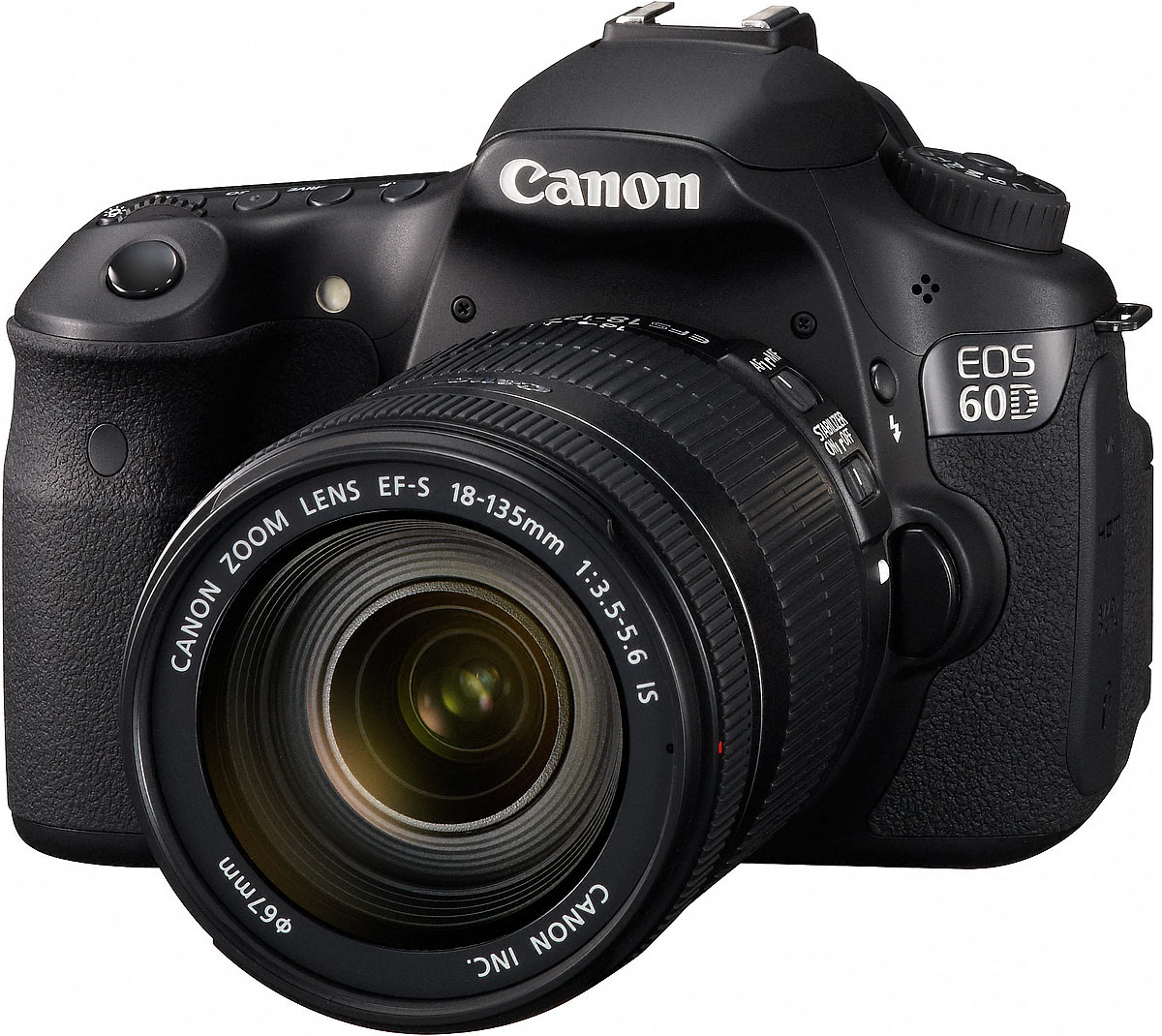
I got a new camera. Well, not exactly new, but a second hand DSLR from an Indian national here in Singapore. It's a Canon 60D which includes the 18-55 kit lens. I'm adamant at first to buy a second hand unit, especially for something with electronic components. I asked my mentor-slash-friend to accompany me and inspect the camera first before buying it. The camera was tested by my friend thoroughly, taking a few shots and inspecting both the camera, the lens, and the output. So far, so good.

something like this
Canon 60d with a different kitlens , image from kenrockwell.com


This is my first time to actually own a DSLR, and my initial thought was it fits comfortably in my hands. The weight of the body and the kit lens is heavy enough to be stable but light enough to carry it around. Perfect, I can do street photography now with this.

However, I found out that shooting with a DSLR is an entirely different ballgame now. I've been very much accustomed with using cameraphone, using the "live view" to frame my shots. With DSLR, framing using the viewfinder is different. I need to familiarize myself with the camera and be comfortable with the viewfinder. Of course, the DSLR is also equipped with live view, but shooting with this is slower.

I was also able to find my way around the complex menu and assortment of buttons, thanks to the 300-page manual which I've downloaded from the Internet. With this, I've learned how to navigate and adjust the ISO speed, aperture, and shutter speed. I tried to experiment with various settings and I've observed that while keeping the aperture constant, exposure will be the same if the ISO and shutter speed are adjusted correspondingly. The noise will be more apparent, especially at higher ISO, which in my camera starts to becomes noticeable at 400.


ISO 400, f/5.6, 1/3sISO 100, f/5.6, 1/3s
Now, I should practice more with this newly-acquired "pana".

Monday, June 3, 2013

A Thousand Words?


If a picture is worth a thousand words, can a thousand words describe a picture?

In our class, we we're discussing about telling the story behind the picture. This is exciting since we would be writing the story to enhance the emotion evoked by our picture. Something comparable to writing a prose, weaving words to accompany the image to help paint the imagery and vividness in the minds of the viewer.

I posted several pictures I took in Singapore, choosing from the set taken when I was outside during the night. I picked five from the set that I thought will show how Singapore looks like during the night. While composition-wise they were sort of okay, the story were not good enough. Apparently, I wasn't able to exude the emotion I felt nor the reason behind why I took those shots. The story lacks personal connection, as one of my classmates pointed out.

Just one of those architectural shots lacking a good story
Gardens by the Bay (Singapore, 2012)


Another classmate asked if I took the architectural shots for the sake of appreciation or for something else. That made an impact, prompting me to question my shots more. I stared at the screen while thinking for an answer, and I can't think of anything. Perhaps I was just being appreciative of the architectural design of the structure.

I then started to check my library of photographs and I noticed some pattern in the way I take pictures. Upon closer inspection, I realized that I prefer to take pictures of inanimate objects: buildings, scenery and food. I'm estimating about three-quarters of my shots belong to this category. I seldom take pictures of people, especially of strangers even if it's a candid shot.

Hello, stranger. Are you talking to me?
The Bull at Gardens By The Bay (Singapore 2012)


Why is it the case? Maybe it's because I don't like my picture being taken by strangers, so I try to avoid doing the same. Another reason is that I could have been playing around the limitations of the cameraphone, I can't take good pictures of anything that moves. However, I can't find any evidence for this reason, maybe the pictures that led me to believe this were deleted long ago and I never checked if this is still the case when I use a different cameraphone. I could have missed taking a lot of shots with great stories just because of this mentality.

Good composition and good exposure is only half of what makes a great picture. The other half is the story behind the photograph. It is not only the elements you are trying to frame but also the emotion associated with it. Without a story, a photograph is just a snapshot of a moment that passed.

With this realization at hand, I can now concentrate on how to improve my skill of  capturing not just good photographs but great photographs.

Suddenly, Bubbles
Bubble Man of Orchard Road (Singapore, 2012)


So, how about you? What's your story?