Sunday, July 28, 2013

Reposts and Reflections

I haven't been updating this blog for a while, however, I still manage to read the blogs of classmates. While I enjoy reading their blogs, here are some of the posts that I find worthy to read and re-read.

One of it is the blog of Kuya Ed. His humor and wit makes the whole reading experience worthwhile. Another is the blog of Kuya Juancho, with one of his posts giving a detailed explanation on how to properly hold the camera. David posted an article on how he was able to make his own drybox. His article inspired me to make one of my own, and the heads-up on where to buy the hygrometer and desiccant was really helpful.

These are just some of the blogs that I find informative. It's nice to learn and pick up new stuff from my classmates. However, there were still some who fail to update the blog list properly, which makes it a bit harder to read their blogs. Nonetheless, they made an effort to write something, so I should just go and read their blogs. It doesn't matter if the article posted is long or short, as long as it talks about photography, its still a worthwhile read. The subject, MMS-173, is photography in multimedia anyway.

ISO-100, f/7.1, 3.2s

This blogging activity made me realize that  there's a lot in common between writing and photography. In order to make it easier for the readers to comprehend the gist, they both should have proper composition. Although people mostly think that photography is just clicking the shutter button, we (multimedia students) know that this isn't exactly true. Just the same, writing a blog post isn't just typing what's on your mind. It should have a flow; so it is important to think beforehand what you're going to write.

Of course, we should also proofread, which I think is comparable to post-processing in photography. Without proof-reading, the mistakes will definately show up, like in this paragraph. However, no matter how careful you are, errors will still creep up. It's up to you how tolerant you are of your mistakes; this will determine how much effort you're going to spend in proof-reading or post-processing.

I guess that sums up the blogging experience. It's part composition and part correction. That might prove to be helpful the next time I press that shutter or write an article post.

Original Image

Sunday, July 14, 2013

Street Photography: Taking Pictures of Random People

Taking pictures of random people is something I'm not comfortable with.

I've been trying to step out of my comfort zone and take pictures of strangers. In the two weeks of my street photography stint, there were only two instances where my subject reacted adversely when I took their pictures.

The first one was a castaƱas vendor. I pass by his cart on my way to the train station. One day, while I was standing near his cart, I tried to take a picture of him while cooking some castaƱas. I lifted the camera to my eyes and as I was composing my shot, his friend noticed me and they both looked in my direction.

I nearly froze. Trouble is the last thing I want to happen to me in a foreign land. My heart was racing, and I had to do something. As a damage control measure, I smiled and approached the two. I explained what I was doing and asked for their permission to take a picture. They agreed and I did my thing, showing them the picture afterwards.

The other instance was when I was taking pictures of people in the outdoor hawker area in Lau Pa Sat. An older man approached me and told me to stop taking pictures. I thought he's one of the waiters in the area, I just told him that this is for a school project. Later, I found out that he's not a waiter but a customer having his dinner with a younger woman. Funny thing is, the couple were not anywhere in my shots. Maybe they just value their privacy that much.

Asking for permission for taking photographs of other people may not be necessary, except for some instances. One example is when taking pictures of kids, it is much better to ask for permission from a guardian. Less hassle as compared to explaining to the police.

Kid on motorbike
Kid on motorbike
I also noticed that people on crowded streets don't usually mind if you take their pictures, or maybe they just don't notice. Perhaps they're too busy minding their own business that they don't really care at all. Business stall owners are also accommodating; but of course, asking for permission is necessary. When in doubt, ask for permission, even if you're taking a picture of a pet.


The owner instructed the dog to stop barking and pose. Good dog.
Still, it all boils down on how you project yourself. I would smile and act friendly when I take pictures of random people, and they would do the same. This is common in areas frequented by tourists, people seem to be generally happy and friendly.  

There are several articles around the web discussing street photography, and here are the three that I found to be good starting points.

http://photographylife.com/street-photography-tips-for-beginners
http://digital-photography-school.com/life-with-a-rangefinder-plus-street-photography-tips
http://www.digitalcameraworld.com/2010/03/26/21-street-photography-tips-from-the-professionals/


Sunday, June 30, 2013

F2F in Singapore

Aris, Daisy and I scheduled an F2F, but due to the haze engulfing the city, we decided to reschedule and  wait until the air starts to clear up. We've been monitoring the pollution level, since this will be the deciding factor for our F2F. Good thing, the smokey haze subsided a bit so we were able to meet up last June 22.

This is gonna be my first time to meet them, which made me excited. Finally, I get to meet some of my classmates, and we're going to shoot around Sentosa. We decided to meet at the ticket concourse area of the Harbour Front MRT station, since this is the easiest place to meet up. Since my only way to contact them is through Facebook chat, I arrived early at the designated meeting place. 

I was starting to get worried since I wasn't able to see them around. Good thing they arrived a few minutes later; I was just thinking if I'm at the right MRT station. Daisy and Aris each brought their own tripods, while tripod-less me brought a borrowed 50mm prime. This is great, we can practice several techniques we've learned in class.

Daisy treated us to a snack and we started to plan our photowalk journey while we're eating. We would be walking around the area and look for some waterfalls for the silky water technique, and proceed to the beach in the late afternoon to capture the sunset, and in the evening, we will go to an overpass and experiment with light streaks. In-between, we will also be shooting anything that we find interesting.

If you look closely, there's a Nikon on top of the tripod
Daisy and Aris
The photowalk also became some sort of a "group study". We we're sharing techniques as we go along , asking each other questions and finding answers together. Collaborative learning is always a good thing. I noticed Aris kept a zip-lock bag for his camera, which is a nice insurance in case it rains. Good thing it didn't that day.

Say Cheese!
Aris here is waiting for the fish to smile

We tried doing the silky water technique earlier, but the sun is shining too brightly that it wasn't possible. Wow, so that's one use of neutral density filters. Later that day, we found another area for this. While they were busy capturing their silky water, I took this photo of a water(less) feature. The absence of flowing water showed what's beneath it.

Fake waterfall under routine maintenance
The Rustic Wall

The blue sky made a nice background for this merlion shot.

Fear my fangs, rawr!
Merlion, as seen from below

I also took several sample shots for future post-processing use, such as this.
Orange-colored flower

We were able to arrive at the beach just in time for the sunset, but the view of the horizon is obscured by a line of trees.

Sunset
It's getting dark, so we then started to go to back to the highway and find the overpass for that light streaks shot. While we're on the way to the train, I stopped to take a photo of this woman in purple.

Waiting for the B
Arriving at the overpass, they quickly assembled their tripod setup. The overpass wasn't that wide, but high enough to provide a nice view of the highway. Good enough for capturing light streaks. While they were busy with that, I looked around for something else.

Their version of our sampaguita vendors
Man selling tissues

I checked how they were doing with their shots. I tried this shot for some bokeh effect but the camera screen of Aris looked  too bright.

Bokeh! And glaring screen!
I should learn how to meter properly

We also experimented with panning shots, using moving cars as subject, and the first rule of shooting cars at night is "don't use flash". Out of a dozen tries, only this one came out without much blurring. 

Zooming cars are hard to capture

It was a nice photowalk. Even though we we're mostly experimenting with shooting techniques, learning together made the whole experience worthwhile. Here are some of the things I learned:

Be wary of the lighting and shadows,
Zip-lock bags are handy protection for rain, get one big enough for the camera,
Nikon lens and Canon lens rotate on different directions,
Don't use flash when taking pictures of cars, it will disturb the driver,
Have a copy of the camera manual in your smartphone,
Lean how to properly meter and be familiar with the different metering modes.


Sunday, June 23, 2013

Hazy Week

The air in Singapore has been hazy since June 16. The thick smoke enveloping the city was caused by the burning forests in Indonesia. This is just great, while I'm trying to go out on a daily basis to practice shooting photographs, the smoky haze made it difficult to walk around the city.

The lonely garbage can 

Just how bad was the haze? Well, its so bad that it can creep inside the room with an aircon. There's no way to escape the smoke, it is present wherever you go.


Street view at noontime

The degree of pollution is measured by the government through the National Environmental Agency, and the information is made available online through their website, http://www.nea.gov.sg/psi/. PSI or Pollutant Standards Index is used to measure the level of pollution, and a good PSI should be between 0 and 50.

at 321 PSI, air is hazardous
While it makes it very difficult to breathe during these days, I noticed it gave an interesting effect to my photographs. The sky is more reddish-orange and nighttime shots made the street lights more dispersed.

at 8:30 in the morning
Street lights looked like spotlights

Aris, Daisy and I were supposed to meet, but we decided to reschedule the photowalk and wait until the air clears up a bit. For now, I shall be limiting the time I spend outdoors.

Saturday, June 15, 2013

The Indian and the Pana


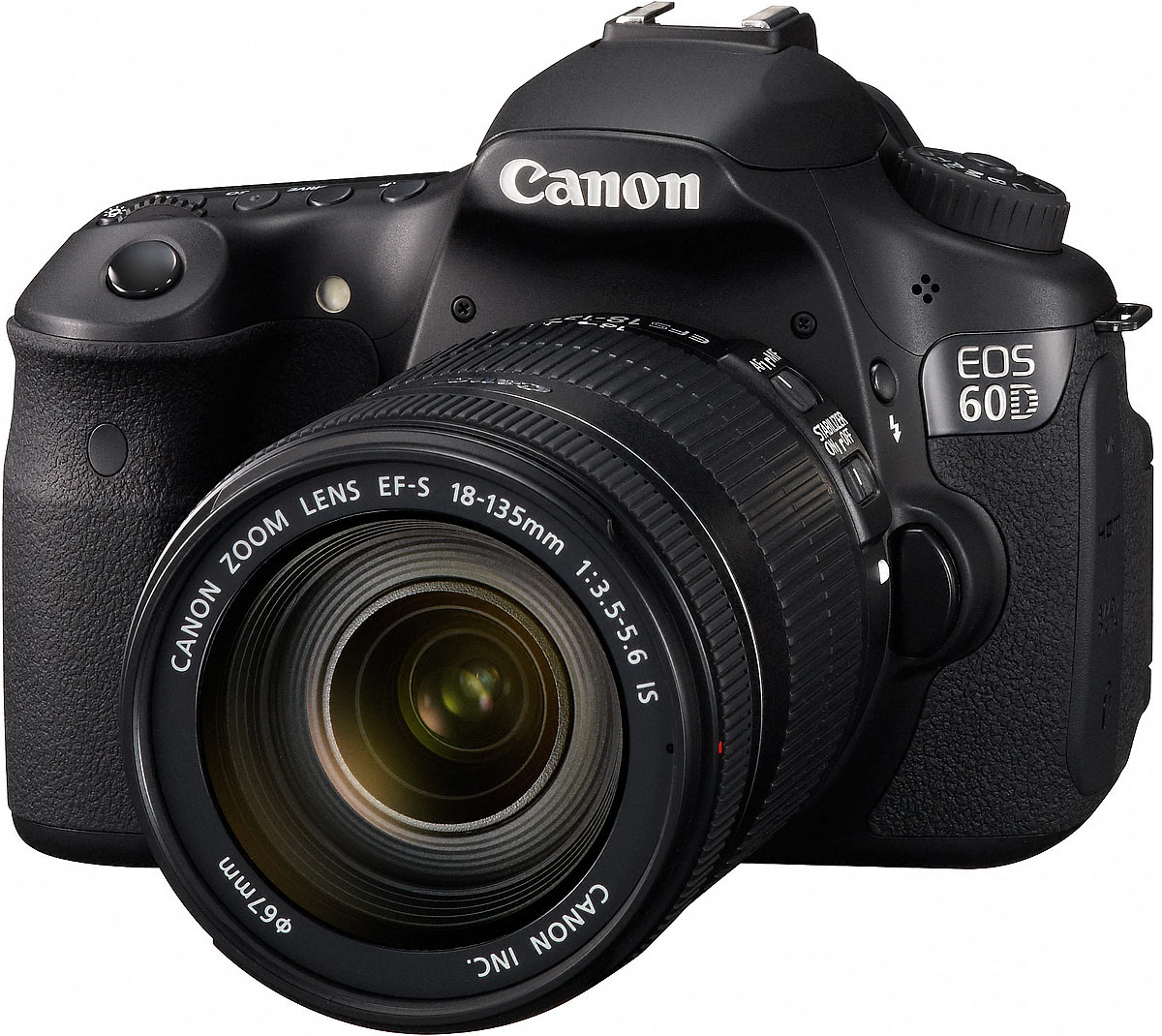
I got a new camera. Well, not exactly new, but a second hand DSLR from an Indian national here in Singapore. It's a Canon 60D which includes the 18-55 kit lens. I'm adamant at first to buy a second hand unit, especially for something with electronic components. I asked my mentor-slash-friend to accompany me and inspect the camera first before buying it. The camera was tested by my friend thoroughly, taking a few shots and inspecting both the camera, the lens, and the output. So far, so good.

something like this
Canon 60d with a different kitlens , image from kenrockwell.com


This is my first time to actually own a DSLR, and my initial thought was it fits comfortably in my hands. The weight of the body and the kit lens is heavy enough to be stable but light enough to carry it around. Perfect, I can do street photography now with this.

However, I found out that shooting with a DSLR is an entirely different ballgame now. I've been very much accustomed with using cameraphone, using the "live view" to frame my shots. With DSLR, framing using the viewfinder is different. I need to familiarize myself with the camera and be comfortable with the viewfinder. Of course, the DSLR is also equipped with live view, but shooting with this is slower.

I was also able to find my way around the complex menu and assortment of buttons, thanks to the 300-page manual which I've downloaded from the Internet. With this, I've learned how to navigate and adjust the ISO speed, aperture, and shutter speed. I tried to experiment with various settings and I've observed that while keeping the aperture constant, exposure will be the same if the ISO and shutter speed are adjusted correspondingly. The noise will be more apparent, especially at higher ISO, which in my camera starts to becomes noticeable at 400.


ISO 400, f/5.6, 1/3sISO 100, f/5.6, 1/3s
Now, I should practice more with this newly-acquired "pana".

Monday, June 3, 2013

A Thousand Words?


If a picture is worth a thousand words, can a thousand words describe a picture?

In our class, we we're discussing about telling the story behind the picture. This is exciting since we would be writing the story to enhance the emotion evoked by our picture. Something comparable to writing a prose, weaving words to accompany the image to help paint the imagery and vividness in the minds of the viewer.

I posted several pictures I took in Singapore, choosing from the set taken when I was outside during the night. I picked five from the set that I thought will show how Singapore looks like during the night. While composition-wise they were sort of okay, the story were not good enough. Apparently, I wasn't able to exude the emotion I felt nor the reason behind why I took those shots. The story lacks personal connection, as one of my classmates pointed out.

Just one of those architectural shots lacking a good story
Gardens by the Bay (Singapore, 2012)


Another classmate asked if I took the architectural shots for the sake of appreciation or for something else. That made an impact, prompting me to question my shots more. I stared at the screen while thinking for an answer, and I can't think of anything. Perhaps I was just being appreciative of the architectural design of the structure.

I then started to check my library of photographs and I noticed some pattern in the way I take pictures. Upon closer inspection, I realized that I prefer to take pictures of inanimate objects: buildings, scenery and food. I'm estimating about three-quarters of my shots belong to this category. I seldom take pictures of people, especially of strangers even if it's a candid shot.

Hello, stranger. Are you talking to me?
The Bull at Gardens By The Bay (Singapore 2012)


Why is it the case? Maybe it's because I don't like my picture being taken by strangers, so I try to avoid doing the same. Another reason is that I could have been playing around the limitations of the cameraphone, I can't take good pictures of anything that moves. However, I can't find any evidence for this reason, maybe the pictures that led me to believe this were deleted long ago and I never checked if this is still the case when I use a different cameraphone. I could have missed taking a lot of shots with great stories just because of this mentality.

Good composition and good exposure is only half of what makes a great picture. The other half is the story behind the photograph. It is not only the elements you are trying to frame but also the emotion associated with it. Without a story, a photograph is just a snapshot of a moment that passed.

With this realization at hand, I can now concentrate on how to improve my skill of  capturing not just good photographs but great photographs.

Suddenly, Bubbles
Bubble Man of Orchard Road (Singapore, 2012)


So, how about you? What's your story?

Thursday, May 23, 2013

Outliers - Your First 10,000 Photographs Are Your Worst


While browsing the Web for some inspiration, I came across this quote:

“Your first 10,000 photographs are your worst.” - Henri Cartier-Bresson

Who is Henri-Cartier-Bresson? According to Wikipedia, he was a French photographer considered to be the father of modern photojournalism. He was also an early adopter of the 35mm format, and master of candid photography. He also helped develop the street photography (life reportage) style that was coined "The Decisive Moment" that has influenced generations of photographers.

Okay, he is the father of modern photojournalism. Credibility-wise, he knows what he's talking about.

Henri Cartier-Bresson, Father of Modern Photojournalism
Modern photojournalism, I am your father.
Image from http://photo.herrimanarts.com/henri-cartier-bresson-4884/

Now, come to think of it, this quote is similar to what Malcolm Gladwell suggested in his book, Outliers. According to Gladwell, it takes at least 10,000 hours of practice to master any field, citing the Beatles and Bill Gates as examples of people with extraordinary achievements in their field.

In today's digital age, it's easy to meet the first ten thousand shots. We don't have to trouble ourselves with the complexity of developing films; we can see the result of our composition as soon as we release the shutter. Entry-level DSLRs are priced attractively and even smartphones are equipped with a camera. Certainly, taking pictures nowadays is a breeze, almost no-brainer. One click and the moment is immortalized digitally.

Even though taking pictures is easier compared to pre-digital era, taking good pictures will still take a bit of a practice. Without knowing the basics of proper composition, you'll hardly find some improvement in your photographs. Knowing the basics of composition will make your photographs a lot better, whether you're using cameraphone or a DSLR.

So, it isn't just about practicing, but analyzing and continually improving your composition. It's less about natural talent and more about how much time you devote into developing the talent. Without knowing how to improve, it won't matter how many shots you take. You'll still end up with a less desirable photograph.

Your first 10,000 photographs are your worst, but with constant practice and conscious desire to improve, the next 10,000 photographs you will take is going to be better.

Wednesday, May 22, 2013

Old and New - The Awakening

I love taking pictures. Ever since I got my first camera phone, I've been taking pictures and saving them in my computer. Since I'm not using any software to organize pictures, I would save them in folders, prefixing the folder name with date. It makes it easier to sort and find the picture I need, with no software involved.

I've been through three phones now. Starting with the Sony Ericsson K750i, Nokia Xpressmusic 5800, and now, Apple Iphone4. Each picture I took, I try to save them in the computer. So far, I'm still able to keep up with this routine.

Lately, we were required to post pictures for critique. I've chosen two photographs from an old collection, taken from an art installation last 2009.

Zarf - coffee sleevesStarbucks Polypropylene Plastic Cup


Why get some from an old set? Well, I believe that "old habits die hard", and checking my old collection of photographs, I would say that there's a pattern in my composition. If I were to come across the same art installations today, I would probably take the same shots, whether I'm holding a DSLR or a cameraphone. Still, I feel there's something wrong with my photos but I can't figure it out. Thankfully, the professor and some of my classmates gave their comments, giving me something to ponder on.

What have I learned from this activity? First, in order to improve, show your work to others and be open-minded to comments. There's always room for improvement, and there are other ways to make your composition better. I've also realized the importance of organizing my pictures. Seeing my old collection is like taking a peek on my personal history, allowing me to reflect on how I took pictures way back when I was still clueless with proper composition techniques. Being aware of my own shortcomings will definitely help on my goal to be a better photographer.


Architectural shot using an iPhone4
Singapore (2012)


Architectural shot using a Nokia 5800
Singapore (2010)

Saturday, May 18, 2013

Goodbye, iPhone

I've been using iPhone for almost two years now. Being a smartphone, I enjoy using it not only for sending SMS and taking calls, but for taking pictures and videos as well. Compared to phones I previously owned (Sony K750i and Nokia 5800 XpressMusic), I can say the iPhone4 is a lot better than those two.

The iPhone4 is equipped with 5 Megapixel camera, and is able to capture HDR photographs (although I rarely use this HDR feature). The option to enable grid pattern in the screen while taking pictures is what I found useful, it makes it easier to follow the Rule of Thirds.

However, I noticed that while the iPhone can take great pictures in daylight, the quality of the image degrades when shot in low-light situation. Sure, I can use the flash, but there are situations where flash is not an option. I need something that offer more control. I can't just rely on the iPhone's software to decide for me what ISO to use or at what shutter speed. If I want to learn more about photography, I should get something with settings that I can play with. I want to experience shooting with different apertures, too.

Sure, there are lens kits available for iPhone. But looking at the price tag, I think I'd rather pass and get a real camera instead. Besides, I don't want my phone to look oddly funny and I don't want the hassle of assembling the lens. The lens may look cute, but it ain't a practical choice.

One-eyed Wall-E? Nope, just a telephoto lens on iPhone
Image from photojojo.com

Looking at that setup above, it made me think if I had to answer a call while taking a picture. Should I cancel the call, or answer and tell "Later, I'm busy taking a picture." Or maybe just put the iPhone in Airplane mode so calls and texts messages won't go through. Yeah, I can do that. But then again, isn't that what phones are for -- calls and text messages?

So, while I'm looking for a new camera, the iPhone will be set aside for what it's best suited for: text messages and calls.


Thursday, May 16, 2013

Updating Second Life

It's almost a year since I last played Second Life. I first played this game as a requirement in MMS 198 (Special Topics - Gaming in Education), wherein we were required to apply the proper composition in photography inside this virtual world. Now, its time to make snapshots again!

Too bad, I already uninstalled Second Life since I can't find the time to play anything nowadays. Luckily, I haven't deleted the installer yet so I was able to install the game again. What surprised me is that the installer was able to detect that I have an outdated graphics driver! Knowing that Second Life is heavy on graphics, I figured it won't hurt to update my drivers. Installation was smooth, I just had to click a few buttons.


AMD Driver Update - free when you install Second Life!
Updating AMD Graphics Driver

To download Second Life, here's the direct link: http://secondlife.com/support/downloads/


My laptop is equipped with 1GB HD5470 graphics card, but still, performance degradation occurs whenever I choose higher quality setting. Thus, I'm stuck at fast performance but of lower quality. At least, its playable and I can fly around.

Second Life Preferences Menu - Minimal Eye Candy
Second Life Preferences Menu

To take snapshots, press Ctrl-Shift-S (or select World from the menu bar, then choose Snapshot). A new window will appear and you may then choose where to save it and at what resolution. I keep mine at original and just resize it outside of the game.

Domo Arigato, Mr. Roboto
Sample snapshot in Second Life

Wednesday, May 15, 2013

Whats in a Name?


Composition Fixation

In visual arts, composition is the placement or arrangement of visual elements. The term composition means "putting together", and in photography, proper composition is what differentiates a "good" image from a "great" image.

Fixation, on the other hand, is maintaining visual gaze on a single location. It could also mean to focus the eyes or attention. Combining the two, composition fixation means focusing the attention to composition, analyzing the overall placement of visual elements in an image.

Composition is an important part of capturing the image, and without knowing the basics of proper composition, the beauty of the image will not be captured. Which is why it is necessary for someone who is just starting out in photography to not just concentrate on the subject, techniques, or the camera, but to always put composition in the forefront.

This is the reason behind the name of the blog. I intend to focus on proper composition techniques to bring out the beauty of the image in a photo. As a multimedia student who has just started out in photography, this blog will serve as a documentation of my journey in the wonderful and exciting world of photography.


Reference: http://en.wikipedia.org/wiki/Fixation_(visual)